
Choosing the right curriculum is not easy anymore. Students are no longer focused only on local education and are increasingly aware of opportunities outside India. This is where the CBSE vs IB curriculum discussion becomes important. Although both systems are well known, they follow different approaches to learning. Understanding these differences helps in making a better academic choice. In a School in Nagpur, this comparison often comes up while planning the right learning path for future growth.
Let’s explain it in an understandable way.
What Is Considered in Global Education?
Global education encompasses more than just studying overseas. Its primary objective is to prepare students to work, adapt, and communicate in a range of contexts. Among the skills that schools are supposed to encourage are critical thinking, problem-solving, teamwork, and cultural awareness. Additionally, students are required to apply what they learn to real-life circumstances rather than just memorise information.
Why “Global Education” Is Getting So Much Attention?
In today’s world, education is no longer limited to one country. Students move across borders for higher studies and careers, and many job roles now require international exposure. This has made global education more important than ever.
Parents now want their children to:
- Study abroad easily
- Adapt to different cultures
- Build skills that work anywhere
They also look for learning systems that focus on communication, confidence, and practical knowledge. This is why people compare international board vs CBSE more often now. The CBSE School Curriculum is often considered for its structured learning and clear focus. The goal is to understand which system prepares students better for a changing world.
What It Actually Means for Today’s Students?
Going overseas is only one aspect of global education for students. It focuses more on how students acquire knowledge, think, and use it in different situations.
It includes:
- Understanding different perspectives
- Learning through practical experiences
- Building communication and thinking skills
These skills help students become more confident and adaptable in new environments.
An international curriculum usually focuses more on these aspects and encourages active participation in learning. That is why many families in IB vs CBSE India discussions lean towards IB when thinking about global exposure and future opportunities.
Earning That Goes beyond One Country
Education today should not feel limited. Students need knowledge that applies everywhere and helps them adapt to different environments.
An international curriculum often includes:
- Global case studies
- Real-life projects
- Open discussions
These methods help students in understanding how concepts function outside of the classroom. In contrast to other boards, the CBSE School Curriculum is highly regulated and sticks to a set syllabus. It promotes methodical learning and well-defined subjects. This shows that both systems provide children with different forms of support, and CBSE’s methodology is sound.
How It Shapes Future Study and Work Options?
The type of education a student gets can affect their future choices.
With global education, students:
- Find it easier to adjust abroad
- Handle new environments with greater confidence
- Understand global standards
This is where questions like CBSE vs IB which is better for abroad become common among parents.
Where CBSE and IB Start to Differ?
Now let’s understand the basics of CBSE vs IB curriculum.
CBSE:
- Follows a fixed syllabus
- Focuses more on theory and exams
- Is widely used across India
IB:
- Is an international curriculum
- Focuses on understanding and application
- Encourages independent thinking
When people discuss IB vs CBSE India, this is usually the first difference they notice.
What Are the Requirements of Colleges and Schools?
International colleges and universities typically consider more than just grades. While academic achievement is essential, they also take into account a student’s participation, communication, and thought processes. Research, projects, and participation in creative or athletic activities are all appreciated. In a CBSE School in Amravati Road, such skills are also encouraged through overall learning. Students who can articulate their thoughts clearly, exhibit curiosity, and think independently are also sought after by colleges.
Which One Has a Stronger Bond with the Real World?
IB tends to be more applicable since it connects education to real-world circumstances.
Students:
- Work on projects
- Do research
- Solve real problems
In comparison, international board vs CBSE shows that CBSE is more textbook-focused. In a School in Nagpur, this difference is often seen in how learning is delivered and experienced by students.
However, CBSE builds strong basics, which also matters.
How Students Actually Learn in Each System?
The classroom experience is very different, and this affects how students understand and apply what they learn.
In CBSE:
- Teachers explain topics
- Students follow textbooks
- Exams are important
This approach helps students build clear concepts and prepare well for standardised exams.
In IB:
- Students ask questions
- Discussions are common
- Learning is more interactive
Students are encouraged to think, share ideas, and explore topics in depth. In a Best School in Nagpur, this kind of learning approach is often highlighted as it helps students stay more involved in the learning process. This is why many people comparing CBSE vs IB curriculum feel IB is more engaging, as it focuses more on participation and real understanding rather than just completing the syllabus.
Which Thinking Skill Encourages You the Most?
IB is renowned for developing critical thinking abilities and pushing students to study more than just the fundamentals.
Students are asked to:
- Analyse
- Question
- Explore
They are often asked to connect ideas and explain their understanding, not just remember answers. At Centre Point School, a School in Amravati Road, such learning methods help students think more independently and build confidence in expressing their ideas. In IB vs CBSE India, IB is often seen as stronger in critical thinking, while CBSE focuses more on clarity of concepts and structured learning, which also builds a solid base.
Study Pattern and Daily Learning Experience
CBSE has a clear and steady pattern. Students know what to study and how to prepare, which makes it easier to plan their studies.
IB, being an international curriculum, is more flexible but also demanding. It requires consistent effort throughout the year.
Students:
- Work on assignments regularly
- Manage time carefully
- Take part in activities
They are also involved in projects and presentations, which add to their learning experience. At a Best School in Nagpur, such activities are an important part of learning as they help students build practical skills beyond textbooks. When comparing international board vs CBSE, IB may feel heavier day-to-day, but it builds useful skills like time management, research ability, and confidence in handling different tasks.
Moving Abroad for Studies: Which Helps More?
One of the biggest questions is: CBSE vs IB which is better for abroad.
IB:
- Is recognised globally
- Matches international university expectations
- Builds research and writing skills
CBSE:
- Is also accepted abroad
- But students may need to adjust to new learning styles
So, in terms of global education, IB often has a slight advantage here.
Subject Choice and Flexibility in Both
IB offers more flexibility.
Students can:
- Choose subjects based on interest
- Mix different fields
CBSE has limited options but is more straightforward.
In IB vs CBSE India, this flexibility makes IB attractive for students who want to explore different paths.
How Recognised Are They Outside India?
Recognition matters when planning to study abroad.
IB:
- Is globally recognised
- Fits well with international systems
CBSE:
- Is recognised too
- But is more India-focused
This is why in international board vs CBSE, IB is often preferred for global exposure.
15. Which One Feels Right for a Global Future?
At the end, the choice depends on the student.
Choose CBSE if:
- You prefer a structured system
- You want strong basics
- You plan to stay in India (at least for now)
Choose IB if:
- You want an international curriculum
- You are planning to study abroad
- You like flexible and practical learning
When people ask CBSE vs IB which is better for abroad, the answer often depends on how early you want global exposure.
FAQs
Quick responses to frequently asked questions regarding IB and CBSE for international education.
Q1. What is the primary distinction between IB and CBSE?
IB focuses more hands-on learning and an international approach to education, whereas CBSE is more systematic and exam-focused.
Q2. CBSE vs IB which is better for abroad?
IB is usually preferred for studying abroad because it matches international standards, but CBSE students can also apply to foreign universities.
Q3. Is IB harder than CBSE?
IB can feel more demanding because of projects and continuous assessment, while CBSE is more straightforward with a fixed syllabus.
Q4. Which is better in IB vs CBSE India?
It depends on the student—CBSE is good for strong basics in India, while IB is better for global exposure.
Q5. Is CBSE superior to an international curriculum?
Although an International curriculum provides greater exposure to the world, CBSE continues to stay a good choice for stability and a solid academic foundation.
Conclusion
The question CBSE vs IB which is better for abroad does not have one fixed answer. Depending on your goals for the future, yes. CBSE is appropriate if your concentration is on India-based exams and systematic learning. IB is a superior option if you want worldwide exposure. Both systems are valuable in the end. Making the best choice for your trip will be made easier if you have an in-depth understanding of the CBSE vs IB curriculum.
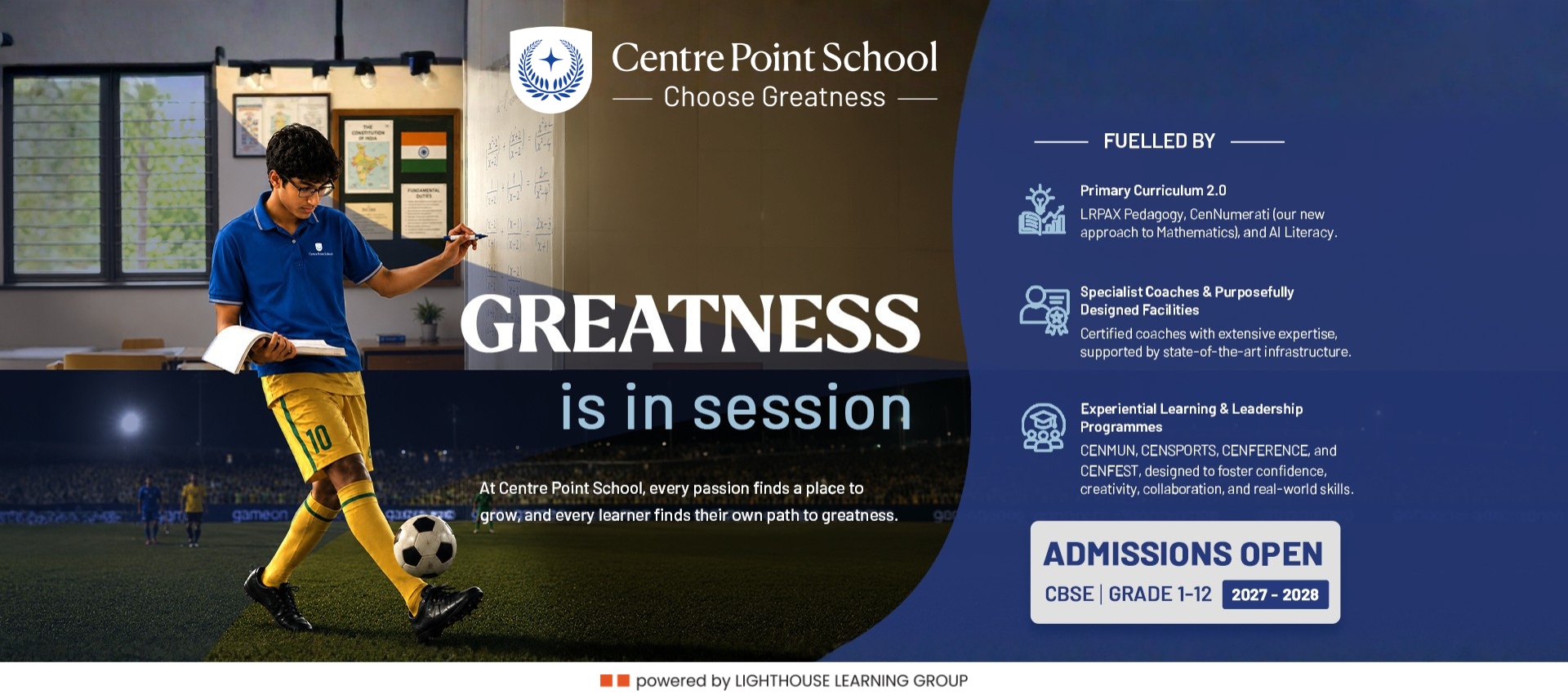
At Centre Point School, a well-known School in Amravati Road, Nagpur, students are provided with a balanced learning environment that strengthens academic foundations while also preparing them for global opportunities in a simple and steady way. The approach helps learners adapt confidently to both CBSE and international learning systems, supporting their overall growth and readiness for future studies. Enquire now to explore admissions and details.